Understanding the Intricacies of Design
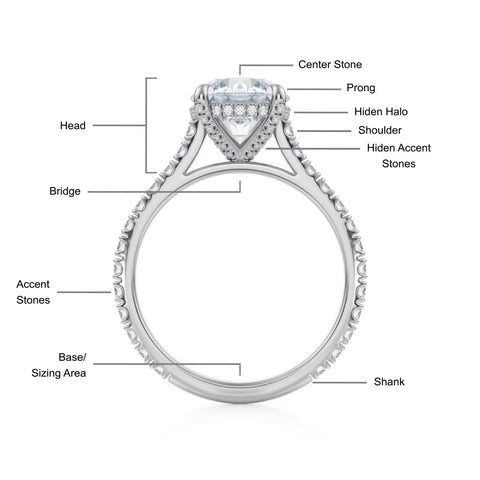
Engagement rings are more than mere adornments; they are meticulously crafted symbols of love, unity, and commitment. Their timeless allure lies not just in their sparkle but also in the thoughtful details that go into their creation. To truly appreciate their beauty, one must delve into the anatomy of an engagement ring. This exploration reveals the intricate interplay of components that combine to create a masterpiece of both art and engineering.
The Center Stone: The Focal Point of Brilliance
At the heart of every engagement ring lies the center stone, the most prominent and eye-catching element. Often a diamond, this gemstone serves as the centerpiece and embodies enduring love and resilience. However, the choice of the center stone extends beyond diamonds. Sapphires, emeralds, rubies, and even alternative stones like moissanite or morganite have gained popularity among modern couples.
The cut of the center stone plays a pivotal role in its brilliance and sparkle. Round brilliant cuts are the most sought-after due to their unmatched light performance, but other cuts like princess, oval, emerald, and pear shapes offer unique aesthetic appeal. Each cut interacts with light differently, creating distinct visual effects that enhance the stone’s allure.
The Setting: Holding the Center Stone in Place
The setting is the structural framework that secures the center stone and greatly influences the ring’s overall style. Among the various types of settings, each offers its own charm and functionality:
- Prong Setting: The most common and classic option, prongs are small metal claws that hold the gemstone in place. Typically, four or six prongs are used, maximizing the stone’s visibility and brilliance while providing a secure hold.
- Bezel Setting: A sleek and modern choice, the bezel setting encircles the gemstone with a continuous rim of metal, offering exceptional protection while creating a clean, contemporary look.
- Halo Setting: This design surrounds the center stone with a ring of smaller accent stones, amplifying its brilliance and creating the illusion of a larger stone.
- Tension Setting: A bold and minimalist choice, the tension setting uses the ring’s metal band to hold the gemstone in place, creating the appearance of a floating stone.
The setting not only determines the ring’s aesthetic but also plays a crucial role in its durability and functionality, ensuring the center stone remains securely in place for years to come.
The Band: The Foundation of the Ring
The band, also known as the shank, forms the foundational structure of an engagement ring. It encircles the finger and provides support for the setting and center stone. Bands come in a variety of profiles, from traditional round to modern flat or knife-edge designs.
Material selection is a critical consideration for the band. Precious metals like platinum, gold (yellow, white, or rose), and palladium are the most common choices. Each metal offers distinct characteristics: platinum is prized for its strength and hypoallergenic properties, while gold offers versatility in color and affordability.
The width and thickness of the band further influence the ring’s overall appearance and comfort. A slender band creates an elegant, delicate look, while a wider band offers a bold, substantial presence.
Accent Stones: Enhancing Beauty and Brilliance
Accent stones are smaller gemstones incorporated into the design to complement the center stone and add an extra layer of sparkle. These stones are often set along the band or arranged in artistic patterns to enhance the ring’s overall aesthetic.
Popular styles featuring accent stones include:
- Pavé Setting: Tiny diamonds are set closely together in the band, creating a continuous sparkle that resembles a paved surface.
- Channel Setting: Stones are set between two parallel metal walls, offering a sleek and modern look while protecting the gemstones.
- Side Stones: Larger accent stones, such as baguettes or tapered diamonds, are placed alongside the center stone, adding depth and dimension to the design.
Accent stones not only enhance the ring’s beauty but also allow for personalized touches, reflecting the wearer’s unique style and personality.
The Gallery: Hidden Details and Craftsmanship
The gallery refers to the area beneath the center stone and setting, often showcasing intricate details that are not immediately visible when the ring is worn. These hidden elements demonstrate the jeweler’s artistry and craftsmanship, offering subtle surprises for those who take a closer look.
Filigree work, engraving, or pierced designs in the gallery can transform a simple ring into a work of art. These details add a touch of vintage charm and elevate the ring’s uniqueness.
The Metal Finish: Adding Texture and Character
The finish of the metal band is another essential aspect of the anatomy of an engagement ring. Different finishes can dramatically alter the ring’s appearance and feel:
- High Polish: A smooth and reflective finish that creates a classic, timeless look.
- Matte: A non-reflective finish that offers a modern, understated elegance.
- Hammered: A textured finish that adds a rustic, organic feel.
- Brushed: A soft, satiny finish that strikes a balance between matte and polished surfaces.
The choice of finish often depends on personal preference and the overall design concept of the ring.
Customization: Personalizing the Symbol of Love
Customization has become an integral part of the engagement ring experience. From selecting unique gemstones to incorporating meaningful engravings, modern couples have endless opportunities to personalize their rings. Some opt for hidden elements, such as birthstones or inscriptions, that hold sentimental value, making the ring truly one-of-a-kind.
The Perfect Balance of Form and Function
The anatomy of an engagement ring is a harmonious blend of form and function. Every component, from the center stone and setting to the band and accent details, works together to create a piece that is both beautiful and practical. Understanding these elements not only deepens one’s appreciation for the craftsmanship involved but also helps in making informed choices when selecting or designing a ring.
An engagement ring is more than just jewelry; it is a timeless testament to love, designed to be cherished for a lifetime. By exploring its anatomy, we uncover the thoughtful artistry that transforms raw materials into an enduring symbol of commitment and devotion.


