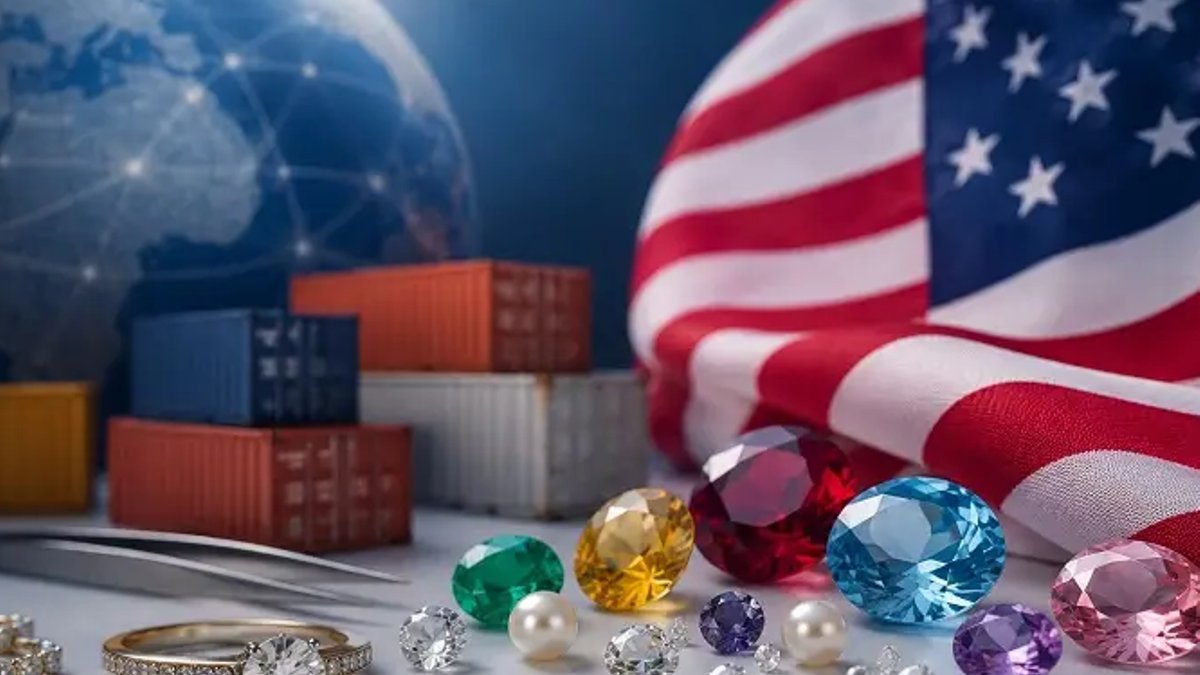
The United States has introduced a new tariff framework targeting the global gemstone and jewelry industry, imposing import duties on products from dozens of trading partners while granting exemptions to specific diamond and gemstone categories. The measures follow a U.S. Trade Representative investigation into forced-labor practices in international supply chains, marking a significant shift in export competitiveness worldwide.
Tariff Structure and Exemptions
Under the new Section 301 measures, products from 60 countries face tariffs of either 10% or 12.5%, depending on each nation’s compliance with forced-labor standards. The exemptions, outlined in a 431-page Federal Register document, cover loose colored precious and semiprecious gemstones, natural pearls, and natural diamonds imported from the European Union, Cambodia, Indonesia, and Taiwan.
These exclusions aim to ensure supply stability for products the U.S. cannot produce domestically in sufficient quantities. However, the exemptions are selective. Hong Kong and mainland China face an additional 12.5% tariff on top of existing Section 301 duties, while Australia, Colombia, and Thailand also incur 12.5% tariffs. India, a major gemstone cutting and jewelry manufacturing hub, falls into the 10% tariff bracket, placing its exports at a lower cost than competitors but higher than the European Union’s duty-free access.
India’s Position and Industry Response
The Gem and Jewellery Export Promotion Council (GJEPC) argues that the tariff disparity benefits Antwerp, Belgium, the world’s leading diamond trading hub, due to the EU’s exemption for natural diamonds. GJEPC Chairman Kirit Bhansali called the 10% tariff unjustified, emphasizing it poses a significant challenge for India’s gem and jewelry exports.
Bhansali noted that while India’s lower tariff category provides some advantage in finished jewelry exports, securing a bilateral trade agreement and tariff exemptions for natural diamonds and colored gemstones remain top priorities. The Gem and Jewellery Export Promotion Council’s stance highlights the uneven playing field created by the exemptions.
US Industry Advocacy Efforts
The American Gem Trade Association (AGTA) has lobbied for duty-free imports from major sourcing countries, including India, Thailand, Sri Lanka, and Colombia. Earlier this year, the association joined members of Congress in urging the administration to exclude loose precious and semiprecious colored gemstones from all tariffs. Despite partial exemptions, AGTA continues advocating for broader relief to preserve stable supply chains and support U.S. businesses reliant on imported gemstones.
Global Trade Implications
The tariff structure reflects the complex balance between promoting ethical sourcing, protecting domestic interests, and maintaining fair international trade. While some exporting nations secure valuable exemptions, others face additional costs that could influence pricing, sourcing strategies, and competitiveness in the global gemstone and jewelry market. Industry leaders are expected to engage with policymakers to achieve broader exemptions and more balanced conditions as discussions evolve.
The USTR’s framework marks a notable shift in trade policy, emphasizing ethical labor practices while reshaping global commerce. The exemptions for gemstones and diamonds from select countries suggest a balanced approach, balancing enforcement with supply chain stability. However, the absence of exemptions for key suppliers like Thailand and Colombia signals a stricter stance, potentially disrupting established trade relationships that have supported U.S. jewelry retailers for decades.


