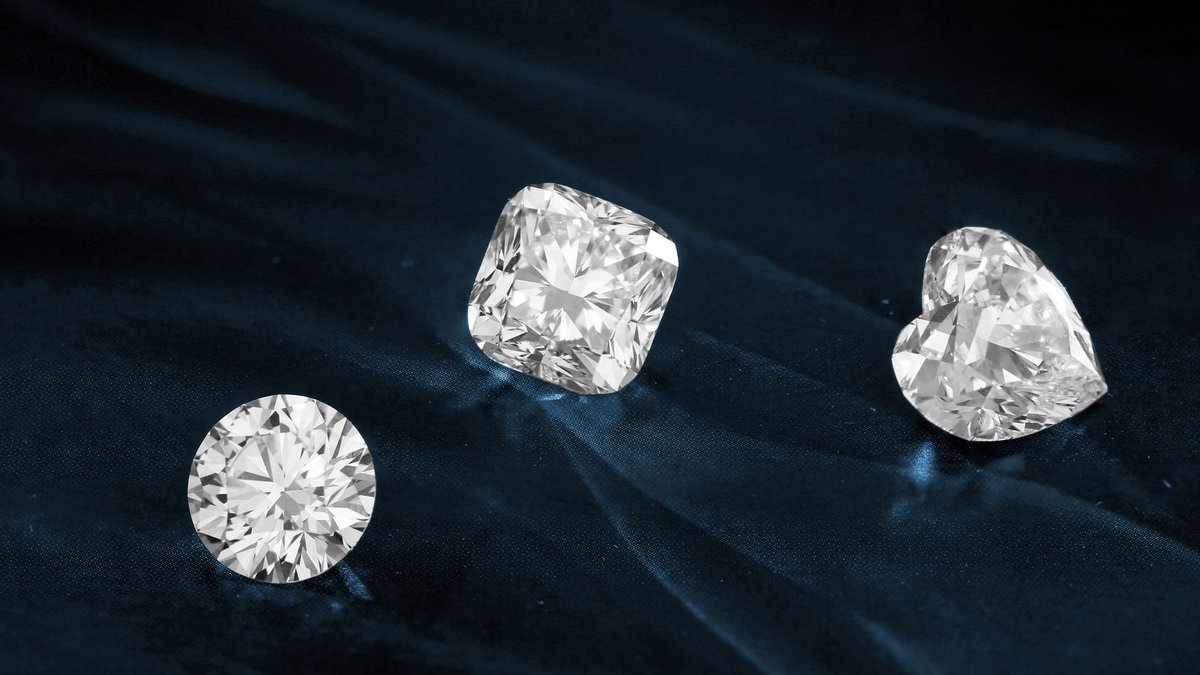
The worldwide diamond market is now confronting an urgent need to settle a long-standing naming controversy after years of casual disregard for the labels applied to lab-produced stones. Industry associations that once swapped freely among terms such as “Lab-Grown,” “Created” and “Synthetic” are presently engaged in heated deliberations over which designation should dominate international trade. This sudden preoccupation prompts two essential questions: why has the issue surfaced at this moment, and who stands to gain from the ongoing split?
Market Shifts Drive the New Naming Urgency
Over the past twelve months, the sector for manufactured diamonds has reached a key structural turning point. Rapid expansion of production capacity—chiefly in Asian facilities—has turned these gems from high-margin, technology-focused components into inexpensive, mass-market consumer products. Falling wholesale rates have consequently raised the commercial stakes.
In a late-hour push, and with the U.S. Federal Trade Commission’s (FTC) anticipated regulatory review in 2027 on the horizon, trade bodies, including the World Federation of Diamond Bourses (WFDB), the World Diamond Council (WDC), and The World Jewellery Confederation (CIBJO), appear to be gravitating towards a unified front. However, this push is exposing deep fault lines across the global trade. Major players representing the true backbone of global synthesis, trading, manufacturing, and consumer sales are sticking firmly to the established 2018 FTC ruling, causing significant friction with those driving the lobbying effort, leaving the global trade divided precisely when it needs alignment.
Uncomfortable Realities for the Legacy Market
The terminology dispute highlights an unsettling shift for the traditional natural-diamond sector. For the first time in more than a century, the conventional diamond industry confronts direct, scalable competition within the retail jewellery arena. While a clear label of origin can generate opportunities for both camps according to consumer preferences, the natural-diamond community must remember that fair competition is lawful and the jewellery market is not a protected entitlement.
Nevertheless, the semantic clash carries hidden dangers. Should the industry reach a consensus that mandates a mandatory qualifier before the word “diamond” for lab-produced stones, the natural-diamond side could later be compelled to adopt a prefix of its own, such as “mined”, thereby reshaping how genuine gems are presented to shoppers.
Related Post: India’s Lab-Grown Diamond Exports Overtake Natural
Applying Pragmatism to a Naming Dispute
Shifts in terminology often mirror broader commercial and structural currents. A recent worldwide discussion on mapmaking illustrates this point: the United Nations called on institutions to abandon the 16th-century Mercator projection, which had long distorted reality, showing Greenland as comparable in size to Africa, even though Africa is roughly fourteen times larger. The push for equal-area projections sought a neutral, standardized framework so that global bodies could move beyond a centuries-old visual bias and concentrate on actual economic conditions.
The diamond trade must adopt comparable pragmatism today. The central challenge is not whether the market finally settles on “Lab-Grown” or “Synthetic,” but the disastrous lack of a unified terminology. Fragmented, regional or partisan labels breed consumer confusion, regulatory clashes and unnecessary compliance expenses for retailers operating across borders.
Where Energy Should Be Focused
Most critically, this low-priority linguistic squabble is draining substantial institutional resources at a moment when both segments face core existential priorities. Organizations representing natural diamonds should direct capital toward revitalising marketing, enhancing ethical supply-chain transparency and supporting mining communities in the Global South. Conversely, producers of lab-crafted diamonds ought to concentrate on industrial applications, energy-efficient manufacturing and sustainable business models within a low-margin environment.
Instead, both sides remain mired in semantic trench warfare. The diamond trade cannot afford to stay stalled over wording. Whether the final agreement adopts “Lab-Grown,” “Synthetic” or a hybrid international term, global trade bodies must convene promptly, establish a single coherent standard and put the dispute to rest. Unity, rather than division, is the sole path to preserving consumer confidence and enabling both natural and manufactured markets to pursue their genuine commercial futures.


