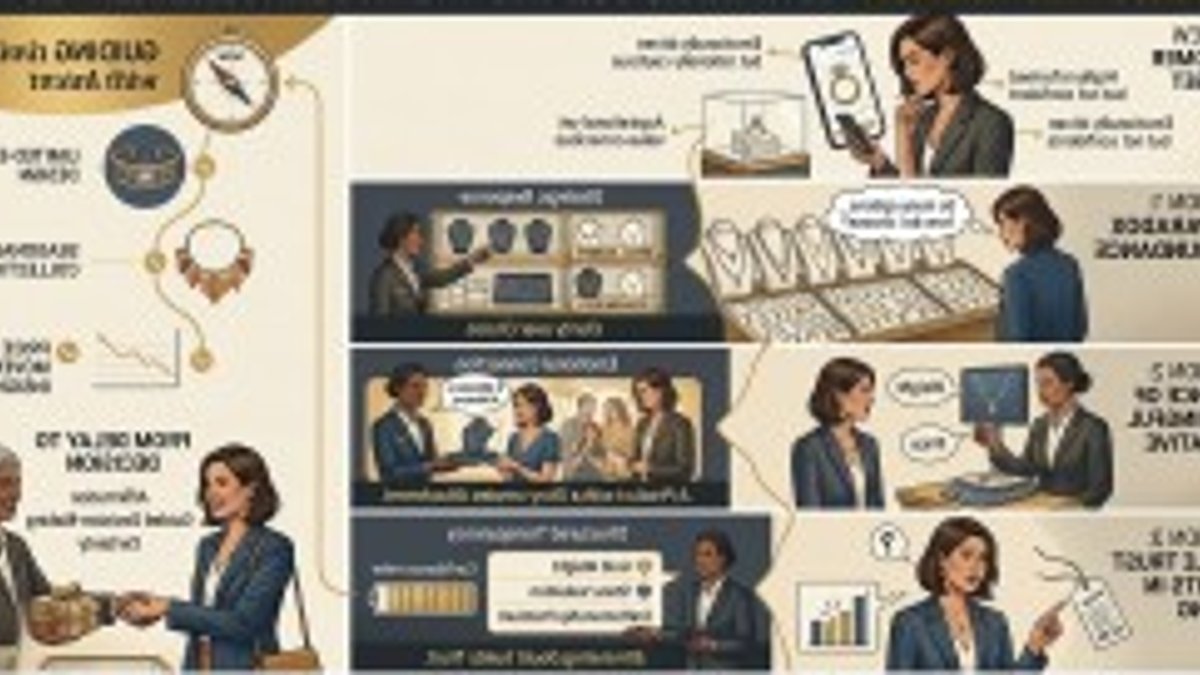
Retailers are seeing that customers delay jewellery purchases even when desire and affordability are clear, a pattern that repeats across cities and product categories.
In a flagship showroom late one evening, a well‑informed client spent more than an hour examining a diamond necklace, asked detailed questions, and visualized the piece with her upcoming event wardrobe. When she finally stood to leave, she simply said, “I’ll take a day to think about it.”
There was no objection, no negotiation, and no sign of dissatisfaction. The incident mirrors a broader shift: shoppers are postponing decisions despite having the means and genuine interest.
The instinct to blame market pressure, pricing wars, or competition misses a subtler cause. The buying journey itself contains hidden obstacles that turn excitement into hesitation.
Too many choices overwhelm shoppers
Jewellery retailers have long equated a vast inventory with strength. Large displays, endless design variations, and massive stock rooms are meant to impress. In practice, the sheer volume often creates a cognitive overload that stalls commitment.
When a shopper faces dozens of similar pendants without clear guidance, the experience shifts from excitement to uncertainty. The result is not rejection but a deferral, as the mind seeks a simpler path.
Guided selling frameworks—such as bridal journeys, occasion‑based edits, or investment‑focused collections—help narrow the field. Staff trained to recommend decisively rather than present endlessly can turn a maze into a clear route.
Related: GRT Jewellers buy 74% of TBZ for Rs1,034cr
Stories sell better than specs
Jewellery is inherently emotional, yet many sales pitches remain transactional, focusing on weight, price, and making charges. Those metrics matter, but they rarely ignite the personal connection needed for a purchase.
A piece without a story invites comparison; a piece with a narrative creates attachment. Positioning a necklace within a life‑event, a lifestyle, or a legacy narrative helps shoppers see themselves wearing it.
Visual and verbal storytelling—showing how a design fits a wedding, a milestone celebration, or everyday elegance—adds purpose beyond numbers.
While the market pushes for more data, the human brain still responds to a good story.
In the middle of these observations, it seems clear that retailers who blend factual detail with emotional context will likely see fewer “let me think” moments. The balance between information and inspiration appears to be the sweet spot for moving a hesitant shopper toward a decision.
Price clarity builds confidence
Even in established showrooms, pricing can act as a subtle trust deficit. It’s not always the amount that worries shoppers, but the opacity surrounding it.
When a shopper cannot see how a total breaks down—materials, labor, design exclusivity—the price feels arbitrary. That uncertainty can trigger a pause, especially among well‑informed buyers.
Related: NAJ Awards Entry Deadline Extended for 2026
Presenting price with structured transparency, breaking down each component confidently, and reinforcing value through craftsmanship and durability can reduce doubt.
Risk of post‑purchase regret weighs heavily
Jewellery is a high‑involvement purchase meant to endure across occasions and trends. Shoppers often ask themselves whether a piece will still feel right a year from now or suit multiple events.
Addressing that risk by highlighting multi‑occasion wear, offering exchange or upgrade options, and guiding customers toward timeless versatility can lower the perceived gamble.
Lack of a compelling “now” stalls action
Without a clear trigger, even an eager buyer may defer. Jewellery purchases that aren’t tied to a fixed event are naturally postponable.
Retailers can create contextual urgency without aggressive pressure—seasonal collections, thematic releases, or aligning pieces with upcoming life events help guide timing.
In practice, a refined experience does not push; it subtly nudges the shopper toward a decision when the moment feels right.
Some retailers are already adjusting their floor plans, training staff to act as curators, and embedding storytelling into every presentation. Early reports suggest that these changes are shortening the “think‑about‑it” gap, turning a day’s hesitation into a completed sale.


