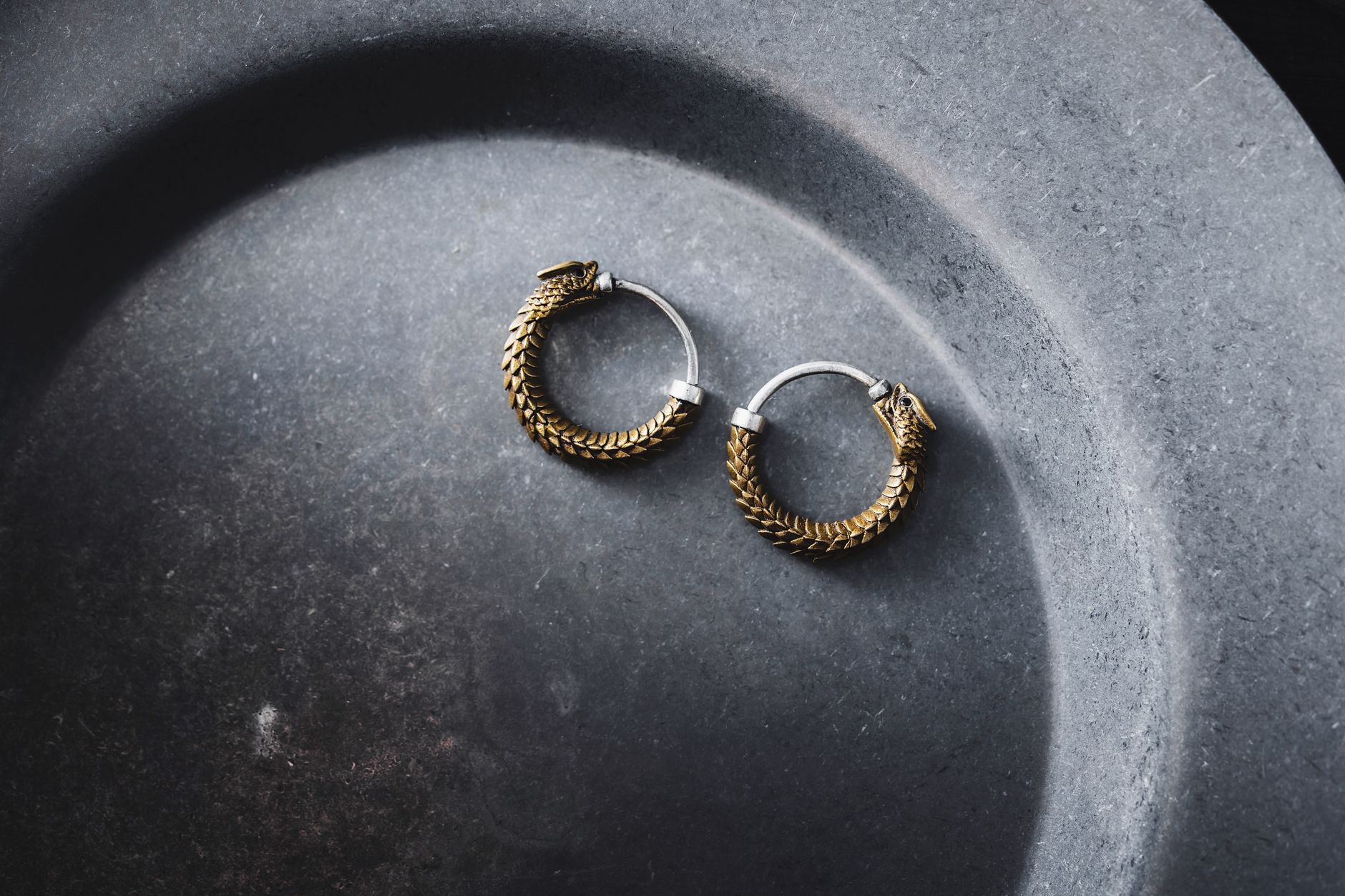
Earrings have always been more than mere ornaments. Throughout history, they have served as powerful symbols of status, identity, and personal expression. From ancient civilizations to the modern-day, the evolution of earrings is a fascinating narrative of cultural significance, technological advancements, and shifting fashion trends. This evolution has transformed earrings from simple adornments into intricate pieces of art, each telling a unique story of the wearer’s cultural context, social standing, and personal taste.
Ancient Beginnings: The Roots of Earrings
The history of earrings dates back to the earliest civilizations, where they were worn by both men and women. Archaeological evidence suggests that earrings were first crafted as far back as 3000 BCE, with some of the earliest known examples discovered in ancient Mesopotamia, Egypt, and the Indus Valley. In these societies, earrings were often symbolic, representing religious beliefs, tribal affiliation, or social hierarchy. For instance, the Egyptians crafted earrings from gold and adorned them with gemstones like lapis lazuli and turquoise, often using them as tools to ward off evil spirits or as offerings to the gods.
The ancient Greeks and Romans, too, embraced earrings, albeit with a more refined aesthetic. Romans favored larger, more elaborate designs, incorporating precious metals such as gold, silver, and bronze. Earrings during this time were also used to mark social status, with wealthier individuals wearing extravagant pieces encrusted with pearls, gemstones, and intricate detailing. The Greeks, on the other hand, preferred simpler styles, often opting for small hoops or studs, reflecting their ideal of beauty as a balance of simplicity and elegance.
The Middle Ages: Earrings as Symbols of Power
During the Middle Ages, earrings became a symbol of nobility and power. The prevailing Christian influence meant that jewelry, in general, became more reserved and was predominantly worn by the upper class. Earrings were often used as an expression of wealth and divine favor, featuring intricate designs that included religious iconography. Pearls, diamonds, and sapphires began to surface in jewelry, marking a distinct departure from the more rudimentary adornments of earlier periods.
Interestingly, while earrings remained popular in royal courts, they fell out of favor with the general population. The medieval period saw a decrease in the prevalence of earrings for common people, with many men, especially in the early centuries, refraining from wearing them altogether. However, by the late Middle Ages, earrings began to make a comeback in Europe, this time in the form of more refined and sophisticated designs, often reserved for the nobility.
The Renaissance and Baroque Periods: A Flourishing of Extravagance
The Renaissance and Baroque periods ushered in a dramatic shift in the design and significance of earrings. This era, marked by the flourishing of art, culture, and science, also saw jewelry design become more ornate and expressive. Earrings became not only an accessory but also a reflection of artistic innovation and wealth. During the Renaissance, earrings were often large, featuring intricate metalwork and elaborate gemstone settings. Pearls and diamonds were highly coveted, and the designs often incorporated religious or mythological themes, mirroring the period’s obsession with classical ideals.
The Baroque period, spanning the 17th century, introduced even more dramatic designs. Earrings in this era were large and extravagant, often embellished with gemstones such as emeralds, rubies, and diamonds. The aristocracy, in particular, favored opulent jewelry, using earrings as a statement of both beauty and power. Chandelier earrings, which featured multiple layers of stones or pendants, became popular during this time, embodying the Baroque penchant for drama and excess.
The Victorian Era: A Return to Romance and Sentimentality
The Victorian era marked a return to more sentimental and symbolic jewelry. Following the death of Queen Victoria’s beloved husband, Prince Albert, mourning jewelry became highly popular, and earrings were no exception. Designs during this period were deeply personal, often incorporating symbols of love, loss, and remembrance. Jet, a black gemstone associated with mourning, was frequently used in earrings during this time.
In the latter part of the Victorian era, the aesthetic shifted towards more decorative styles. The use of diamonds and colored gemstones in earrings became widespread, and the iconic “dangling” earring style emerged. The intricate designs of Victorian earrings reflected a fascination with nature and romantic ideals, often incorporating floral motifs, bows, and other delicate features. The period also saw the rise of the “earring suite,” where matching earrings, necklaces, and bracelets were crafted to complement one another.
The 20th Century: Earrings as Fashion Statements
The 20th century was a defining period in the evolution of earrings. As society moved through the eras of Art Nouveau, Art Deco, and modernism, the role of earrings transformed from one of social symbolism to one of personal style and fashion. In the early 1900s, earrings were delicate and refined, often featuring geometric designs and pearls. The Art Deco movement, which emerged in the 1920s, introduced bold, geometric shapes and a vibrant use of color. Earrings from this period were often large and asymmetrical, incorporating gemstones like onyx, jade, and emeralds.
The mid-20th century brought about the rise of mass production, making earrings more accessible to the general public. The post-World War II period saw a shift towards more casual, everyday wear. Styles became more varied, with studs, hoops, and ear cuffs emerging as popular designs. The 1960s and 1970s, marked by the counterculture movement, also saw a surge in the popularity of unconventional earring styles. Hoop earrings became synonymous with rebellion and free-spiritedness, while ethnic and bohemian-inspired designs gained favor.
The latter half of the century saw earrings continue to diversify, with designers experimenting with new materials, shapes, and sizes. By the 1980s and 1990s, oversized earrings were all the rage, often featuring bold, sculptural designs. The rise of celebrity culture and fashion icons also played a significant role in popularizing specific earring styles, from the glamorous, large hoops favored by pop stars to the minimalist studs worn by supermodels.
The Modern Era: Diversity and Innovation
In the 21st century, earrings have become an essential accessory in the world of fashion. Contemporary designers have pushed the boundaries of earring design, incorporating innovative materials such as acrylic, titanium, and recycled metals, alongside traditional materials like gold, silver, and diamonds. The use of technology in jewelry design has also allowed for intricate, laser-cut patterns and customizable earrings that cater to individual tastes.
Moreover, earrings are no longer confined to traditional gender norms. While earrings have always been worn by both men and women, modern fashion has embraced more fluid and inclusive designs. Today, earrings are a key part of the gender-neutral and androgynous fashion movements, with designers creating pieces that can be worn by anyone, regardless of gender identity.
Conclusion: A Continuum of Personal Expression
The evolution of earrings has been a dynamic journey, marked by changing cultural values, artistic movements, and personal expressions. From their origins as symbols of power and protection in ancient civilizations to their status as contemporary fashion staples, earrings have remained a versatile and enduring accessory. As society continues to evolve, so too will the art of earring design, ensuring that this timeless accessory will always reflect the ever-changing desires and expressions of those who wear them.


