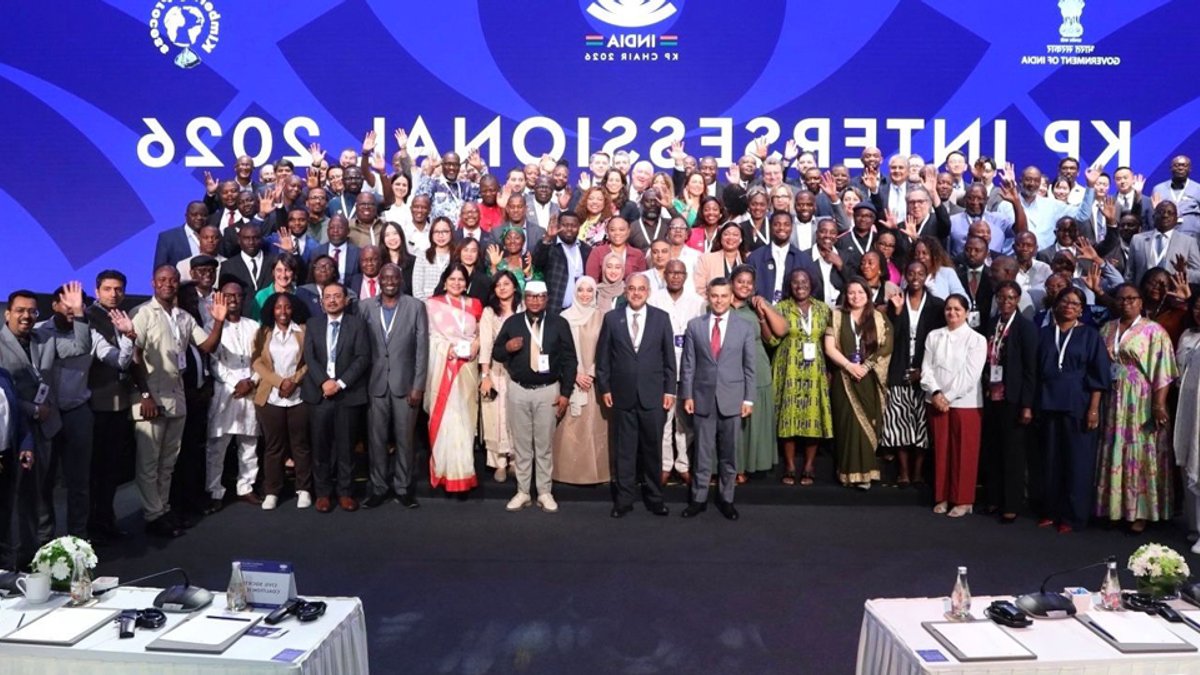
The Kimberley Process Intersessional Meeting 2026 concluded in Mumbai under India’s Chairmanship, bringing together representatives from KP Participants, Observers, industry stakeholders and civil society organisations for four days of deliberations on the future of the natural diamond sector. Held under the theme of the 3Cs – Credibility, Compliance and Consumer Confidence – the meeting advanced discussions on strengthening trust, transparency and cooperation within the Kimberley Process framework.
Working Groups and Committees held detailed discussions on monitoring, technical processes, governance, statistics and artisanal production, with a sustained focus on reinforcing trust across the natural diamond value chain. The meeting also highlighted the importance of enhancing communication and outreach efforts to better convey the positive impact of the Kimberley Process to end consumers, including responsible sourcing practices and development outcomes across producing nations and communities.
India’s Commitment to Strengthening the Process
Welcoming the conclusion of the Intersessional, Union Minister of Commerce and Industry Shri Piyush Goyal said India, as the world’s leading centre for diamond cutting and polishing, recognises the vital role of the KP in ensuring that natural diamonds remain a symbol of trust, responsibility and shared prosperity. He said that under India’s Chairmanship, the country remains firmly committed to advancing the 3Cs and to working with all Participants and stakeholders to strengthen the KP’s relevance in a rapidly evolving global marketplace.
The Minister further said the natural diamond sector sustains millions of livelihoods across producing, processing and consuming nations, and India will continue to champion a KP that is robust, transparent and responsive to both industry and consumer expectations. KP Chair 2026 Mr. Suchindra Misra said the progress achieved during the Mumbai Intersessional reflected the shared commitment of Participants and Observers towards keeping the Kimberley Process credible, relevant and responsive to the changing global diamond trade and consumer expectations.
Related Post: India’s Lab-Grown Diamond Exports Overtake Natural
Trust as the Foundation of the Diamond Trade
Chair Misra emphasised that trust remains the foundation of the natural diamond trade and highlighted the importance of reinforcing the Kimberley Process as a pillar of responsible sourcing, transparency and confidence across the diamond value chain. The Chair underlined that the Kimberley Process’ unique tripartite structure and consensus-based approach, bringing together governments, industry and civil society, continues to be one of its key strengths.
The Kimberley Process Certification Scheme, established under United Nations General Assembly Resolution 55/56 of 2000, is a global initiative aimed at preventing conflict diamonds from entering legitimate trade and promoting responsible sourcing across the natural diamond supply chain. As a leading global centre for diamond cutting and polishing, India reaffirmed its commitment to the objectives of the Kimberley Process and to promoting transparency, sustainability and responsible practices in the natural diamond sector.
While the immediate focus of the meeting was on strengthening the mechanisms that underpin the certification scheme, the discussions held during the Intersessional will carry forward into the KP Plenary scheduled to be held in New Delhi later this year. The Plenary will continue the work on credibility, compliance and consumer confidence under India’s Chairmanship through 2026. The meeting witnessed participation from KP Participants, the World Diamond Council, Civil Society Coalition members, industry bodies and other stakeholders. The continued focus on transparency and operational mechanisms suggests that the participating nations are working to address the practical challenges of monitoring a global trade network that spans many jurisdictions and regulatory environments.


