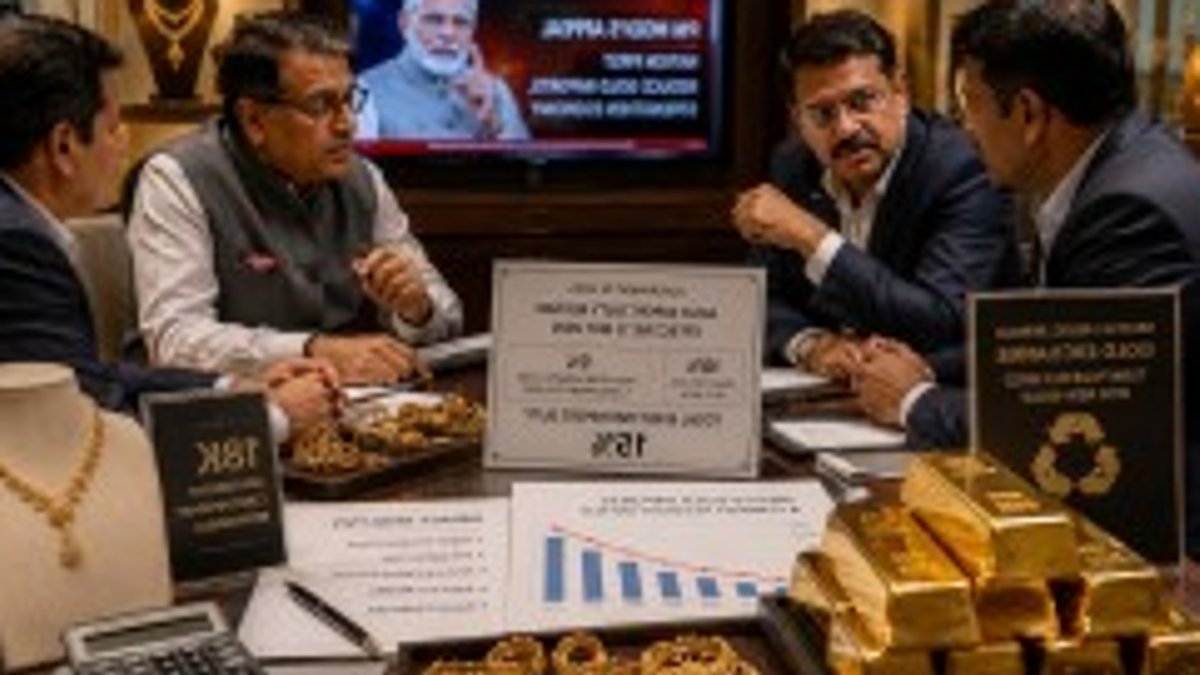
India’s gems and jewellery sector has thrown its weight behind a government push for gold conservation, even as the nation implements a significant hike in import duties. The decision to raise the effective duty on gold and silver to 15% has drawn a mixed response from trade bodies and major retailers who broadly support Prime Minister Narendra Modi’s call for responsible consumption. However, these leaders are also warning that the policy could squeeze liquidity and disrupt the industry’s export capabilities.
New Duty Levels and Market Impact
Effective May 13, the government increased the Basic Customs Duty (BCD) on gold imports from 5% to 10%. Simultaneously, the Agriculture Infrastructure and Development Cess (AIDC) rose to 5% from 1%. Officials cited mounting pressure on the current account deficit and declining foreign exchange reserves as the primary drivers for this fiscal tightening.
The revised structure targets broader economic stability while aiming to curb the consumption of imported bullion. Government sources stress that the move comes at a time of rising geopolitical uncertainty and fluctuating global trade flows. Critics in the industry argue that higher tariffs historically have rarely succeeded in stopping import volume. Instead, they suggest that such measures often encourage smuggling or push prices higher, which hurts the end consumer.
Related: India’s Lab-Grown Diamond Exports Overtake Natural
GJEPC Recommendations and Industry Warnings
The Gem & Jewellery Export Promotion Council (GJEPC) moved quickly to align with the administration’s “Nation First” narrative. The council held an emergency meeting with manufacturers and retailers to discuss the Prime Minister’s remarks on restraint. They submitted a list of proposals designed to reduce reliance on imported gold. These suggestions include promoting lower-carat jewellery, expanding old gold exchange programs, and revitalizing the Gold Monetisation Scheme (GMS).
Despite the support for reform, GJEPC drew a line in the sand regarding the financial burden on exporters. The organization highlighted that nominated agencies now require significantly higher bank guarantees for duty-free gold procurement. This change creates a severe working capital strain. Furthermore, the council warned that Micro, Small and Medium Enterprises (MSMEs), which make up nearly 80% of their membership, are the most vulnerable to these liquidity crunches.
Stakeholders have also raised concerns that prolonged high duties could impact export competitiveness at a time when global demand conditions remain uncertain. The GJEPC reiterated that while higher duties have not historically stopped imports, they do increase the risk of illegal trade, which ultimately undermines the legal manufacturing base.
While the rationale for conserving foreign reserves is economically sound, the government faces a difficult balancing act. The domestic gems and jewellery sector is not just a market for luxury goods but a massive employment engine for millions of artisans. Imposing strict duties without adequate support for the supply chain could threaten the survival of small manufacturers who rely on a steady flow of affordable raw materials to maintain their livelihoods.
Related: Chandelier Earrings: A Radiant Expression of Elegance and Luxury
Retailer Initiatives and Recycling Focus
In the retail space, major players are pivoting to internal solutions to mitigate the impact of the tariffs. Malabar Gold & Diamonds submitted a detailed proposal to the government. Their recommendations focus on the Gold Monetisation Scheme. They asked for lower minimum deposit thresholds and easier e-KYC procedures to encourage participation. The company stated that mobilizing even a small percentage of India’s estimated domestic gold holdings could significantly reduce import dependence over time.
Kalyan Jewellers launched its “Nation First – Gold4India Initiative,” a four-part program emphasizing old gold exchange, monetization, and increasing the use of 18K jewellery to optimize consumption patterns. Senco Gold Ltd also reported a shift in consumer behavior. Managing Director Suvankar Sen noted that about half of the company’s business already relies on recycled gold. Senco continues focusing on lightweight options like 9KT and 14KT to stay competitive.
The broader industry consensus currently reflects support for national economic priorities and responsible gold utilization, while also emphasizing the need for balanced policies that protect exports, preserve artisan employment and maintain liquidity across the jewellery manufacturing ecosystem.


